

I've been trying out local queer and queer-friendly social dances here in Portland - for connection, movement, and play. In dancing with partners, I am having fun learning something about the roles of follow and lead.
The first time I went to the weekly swing dance, I stepped immediately into the follow role. While my body loves to move to music, I didn’t know much of anything about moving in relationship with another person. And while this space does a pretty good job of being gender-flexible in lead/follow roles (instead of the traditional man/woman/gender binary roles), there were still subtle ways that my femme gender presentation had me slotted to follow someone else’s lead. It was fun, and I was glad to have the protection and creativity of a lot of leads as I newly learned something about swing dancing.
The second time I went, I felt myself wanting to play up more gender resistance in the space. I didn’t want to just slot in to the follow role because I was wearing a dress. I got there early enough to experience another crash course in the very basics of dance, and was happy to step up and learn something about leading.
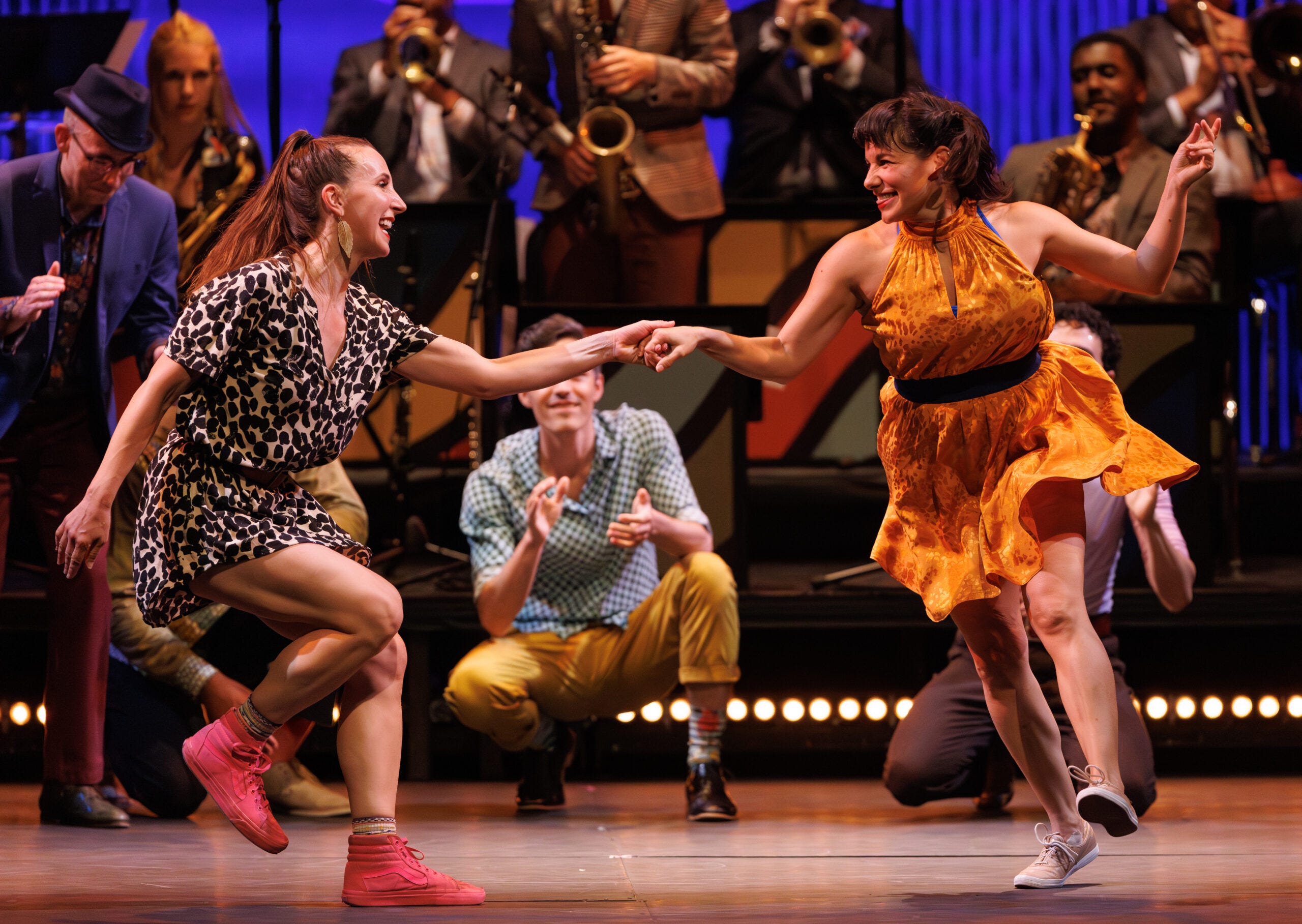
And while I felt awkward most of the evening, I felt into the possibilities of leading during a couple of dances where my steps started to make sense and my capacity to direct started to come through. There’s something special about inviting the twirl of a pal in a pretty dress, feeling them accept that invitation and expand creatively, allowing the full fabric of their fashion to delightfully catch the competing pulls of centrifugal force and gravity. More please!
More on: The rise of queer-friendly social dances
What are some initial notes I took about leading from the body at queer social dance?
Leading is not a dictatorship, leading is a mirrored exchange with following. Most people who work from a lead-follow hierarchy would probably say following is the mirror of leading. But because I learned to follow first, I felt moving into leadership as a move to mirror that base of my initial learning. The most fun dancing - whether I’m leading or following - comes when I’ve found the energetic connection with my dance partner and can play with that flow of energy exchange.
Leading holds the outside structure, giving the follower a safe-enough space to play. More twirls can be trusted when the lead structure is stable and secure. As a new dancer, that means keeping my steps steady first and foremost.
In creating a stable base, leads don’t get stuck in routine moves, instead springboarding into infinite creativity about what they invite their partner to enjoy with them.
I’m taking notes on leading in partner dance, but I’m also talking about what it can mean to lead in life.
What does it mean to lead less from command and control, and more from mirroring the best magic of your collaborators?
How do you create a structure and foundation that your collaborators can find their place to contribute?
How do you use this stable base to creatively spark all kinds of funplay in yourself and your collaborators?
My brain felt scrambled most of the night as I moved between leading and following roles. Where do my hands go? Which foot moves first? How do I keep rhythm while we’re twirling across the floor together?
It didn’t feel like the wisest move to be trying to switch between lead and follow roles at every song.
And yet even with all the learning brain scramble, I’ll always remember that first time I made that dress twirl.
Want coaching – on being comfortable in your own skin while learning to dance, on finding your version of leadership beyond the command and control BS that we’re told is what a leader is? Reach out for a free 1-1 conversation with me, and we can explore this together.